I explored virtual worlds on Minecraft Education and this is what I learned

What are Virtual Worlds?

Virtual worlds are “a synchronous, persistent network of people, represented as avatars, facilitated by networked computers” (Bell, 2008, p. 2). There are four different types of virtual world:

  1. Flexible narrative worlds
  2. Social worlds
  3. Simulation worlds, and
  4. Workspaces (Warburton, 2009)

What is Minecraft Education?

Minecraft is a “an open-ended “sandbox” game…where players build constructions of textured cubes in a world with its own laws of physics” (Overby & Jones, 2015, p. 21). Minecraft Education builds on this by adding  “standards-aligned content across K12 subjects and special features designed for classroom use” (Mojang, 2019). It is specifically designed for classroom use.

Minecraft can be used to teach art (Overby & Jones, 2015), media literacy (Dzeuanni, 2018), mathematics (Bos, Wilder, Cook, & O’Donnell, 2014), and potentially most other subject areas.

Having a play…

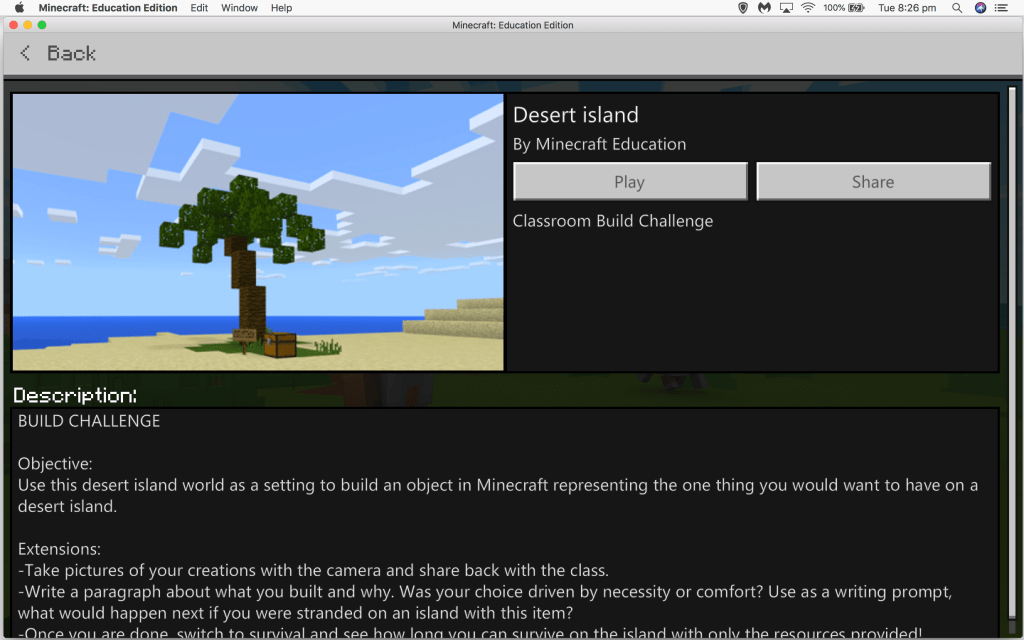
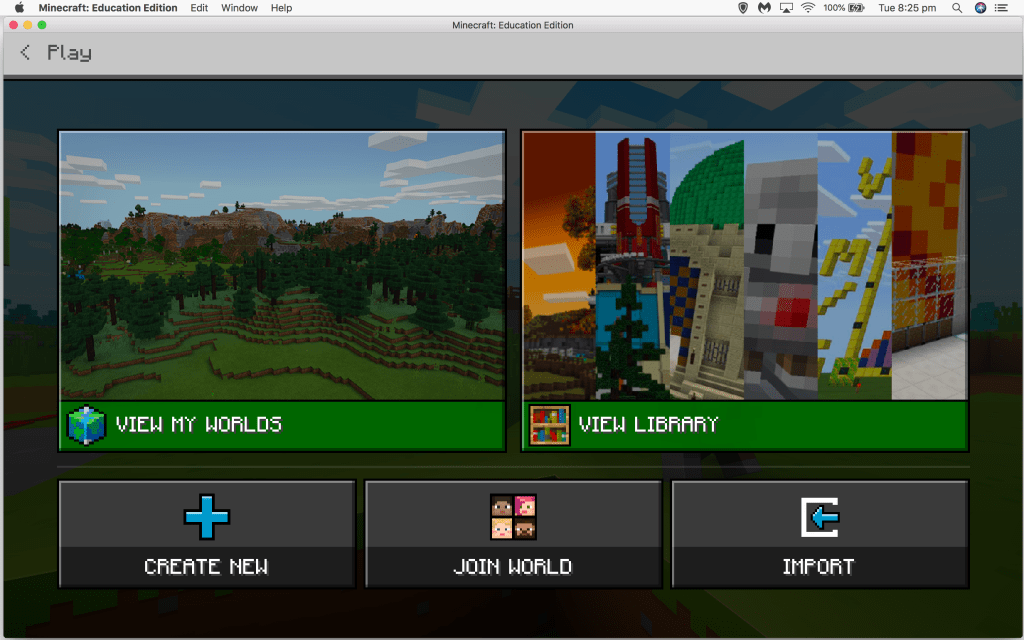
 I would like to preface this by saying that I have never played Minecraft before, nor incorporated it in a lesson! I downloaded and explored Minecraft education and this is what I found.
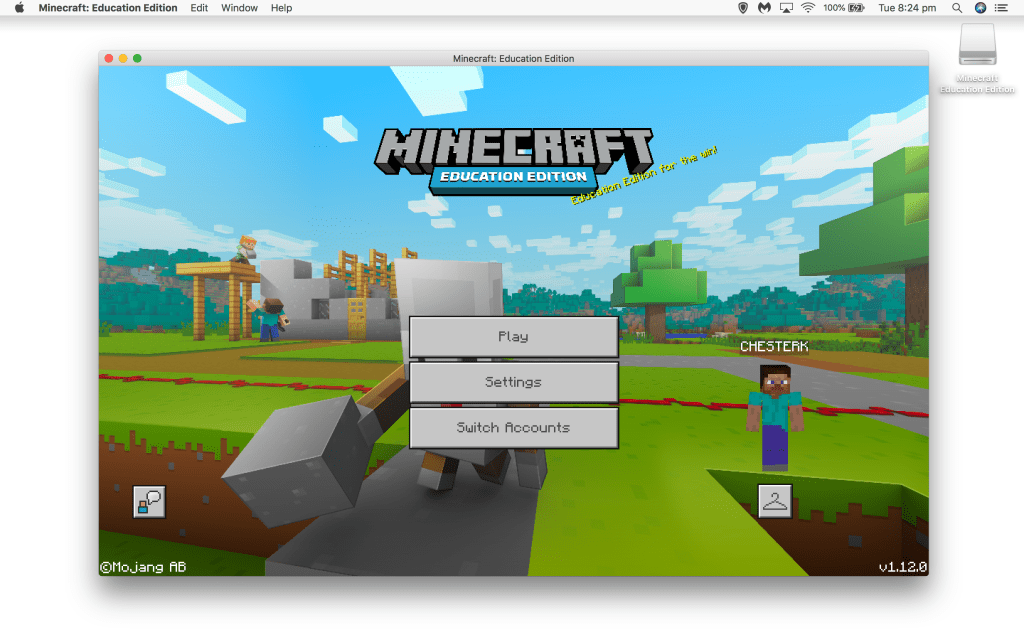
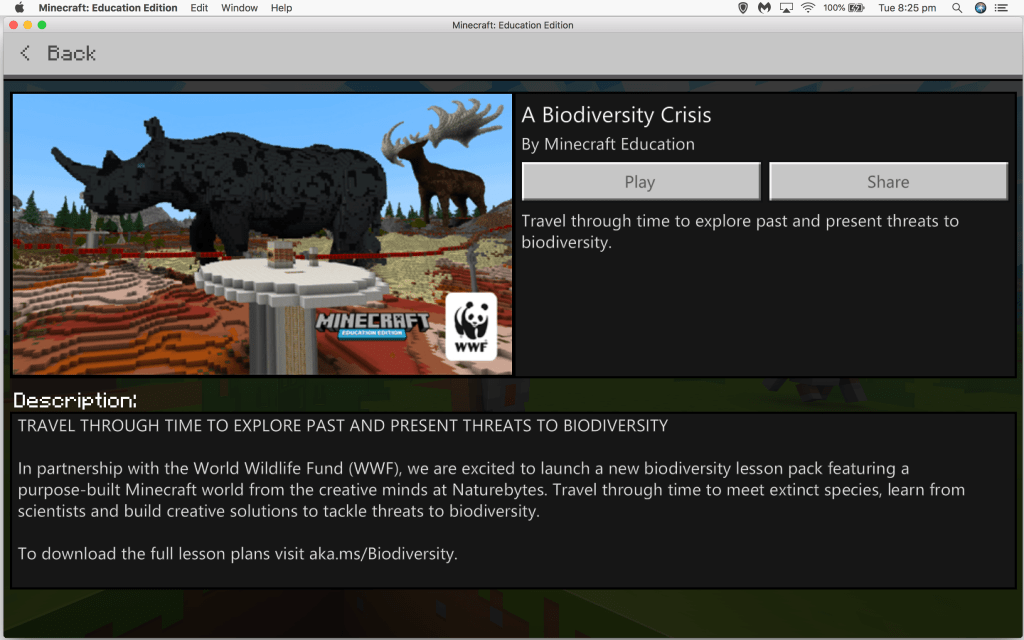
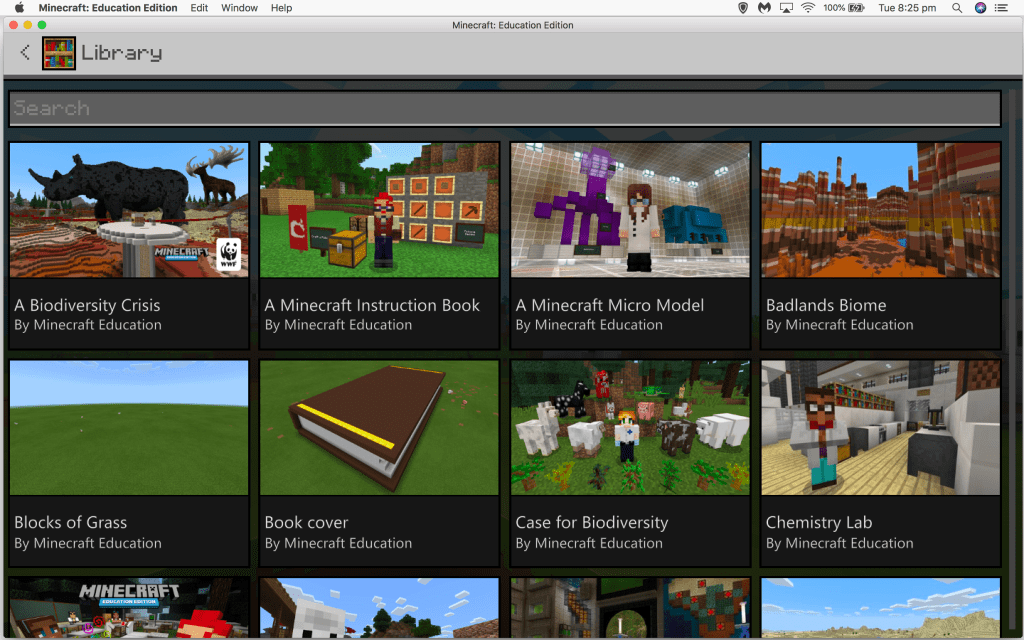
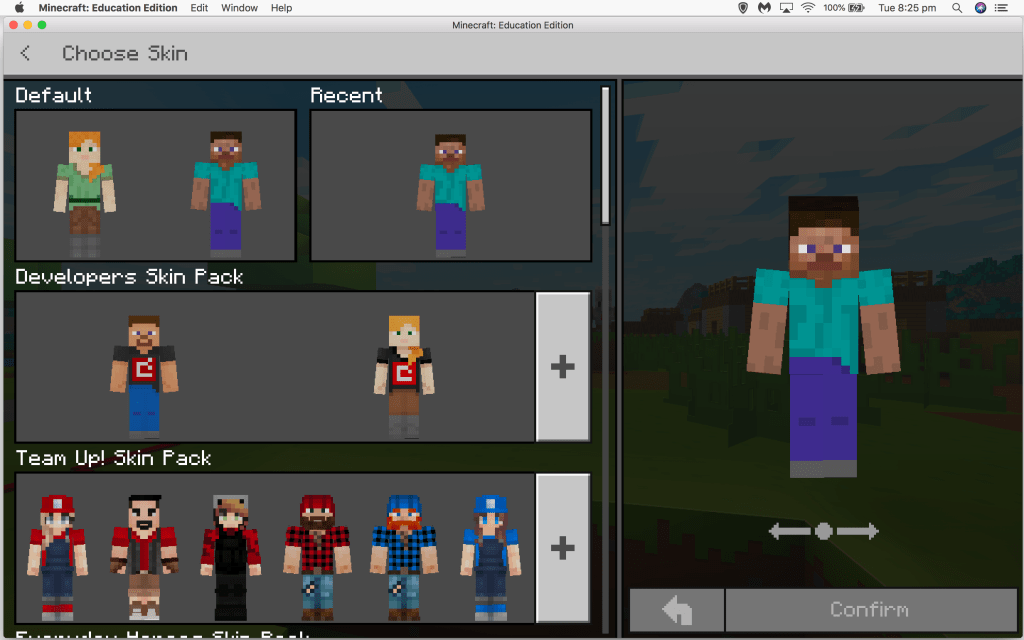
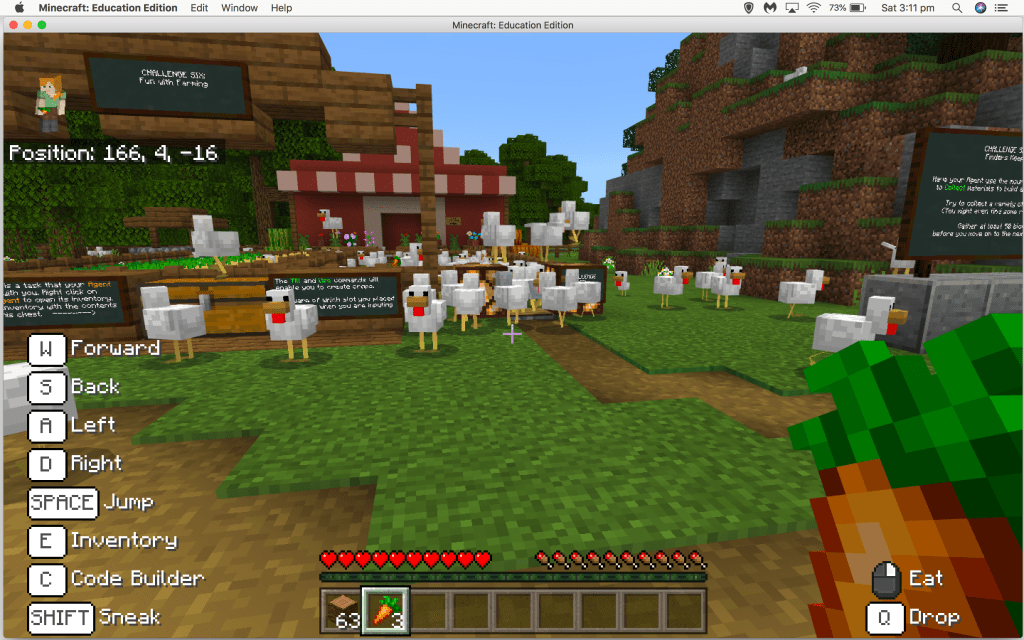
Opening up and getting started was relatively straightforward. I was able to alter my avatar to my liking,  and then I quickly started exploring the “Library”, which contained a huge amount of pre-made content for teachers to use in their classrooms. Many were related to sustainability, for example, the “Zero Waste Challenge” and “A Biodiversity Crisis”. You can find more lessons that are sorted into subject areas on the Minecraft Education website, as well as an area dedicated to the Australian Curriculum.
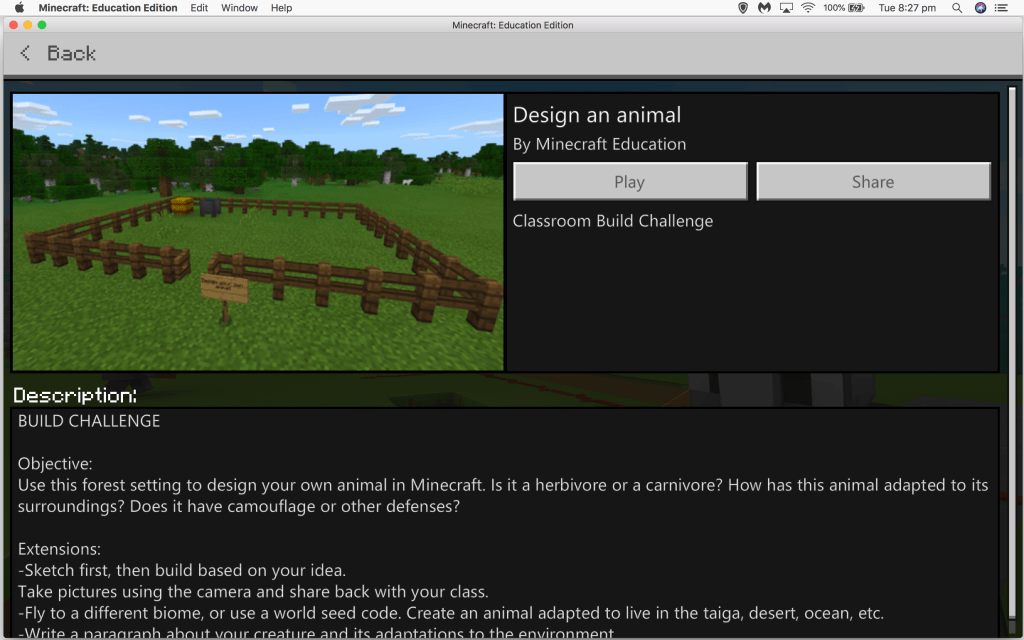
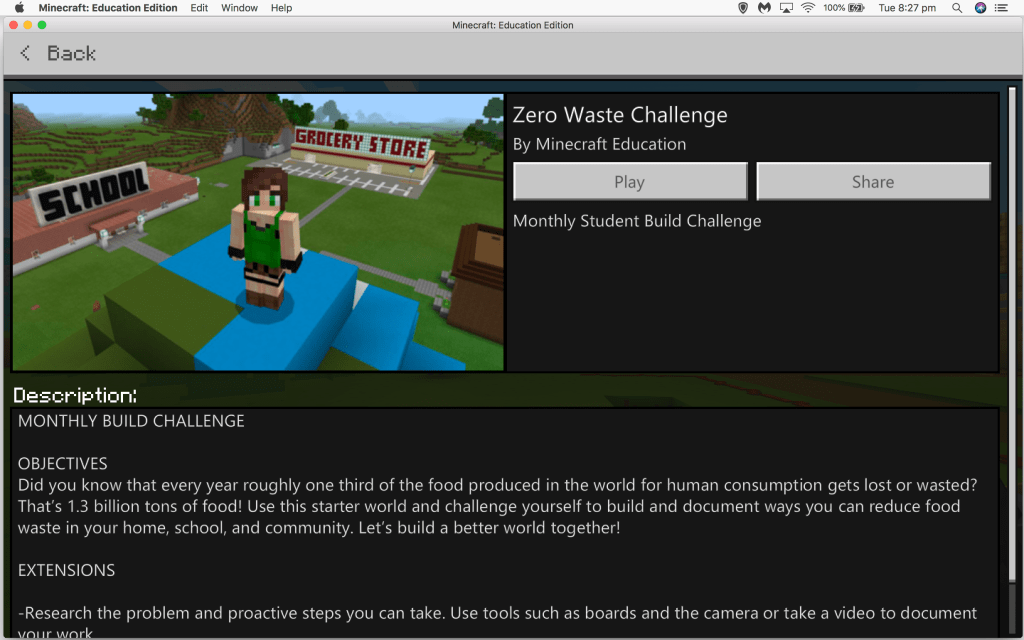
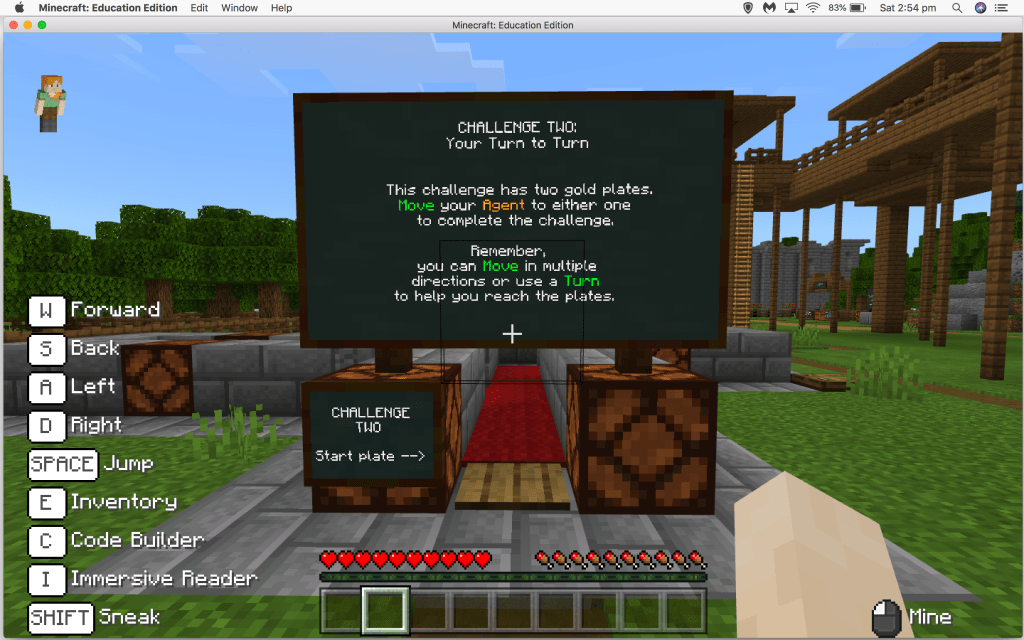
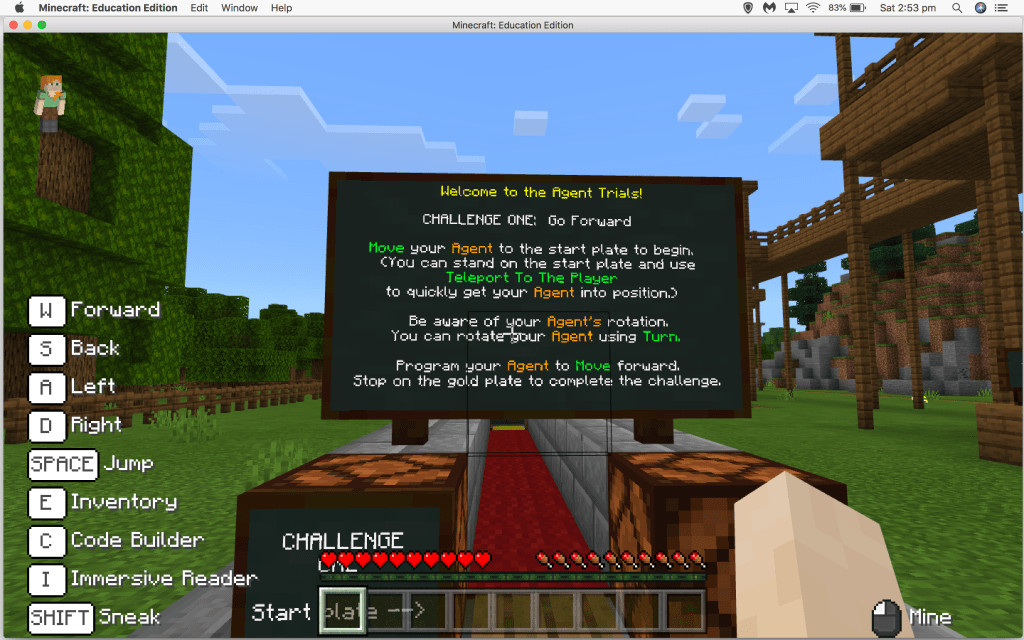
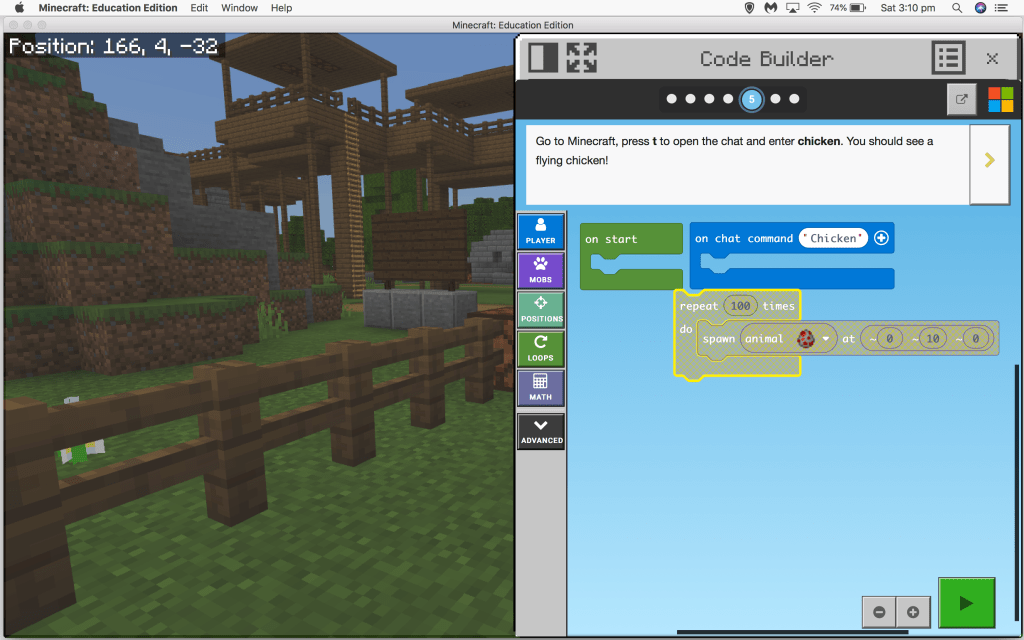
I did not explore the game for very long (this was not my choice, I am unfortunately a very busy person at the present!) but I do think that to begin with, it is important to give students time to explore the features before assigning a project. I used the “Code Builder Tutorial” to help get an understanding of the game and learn the basics. I will admit, I found some of the activities somewhat challenging! However, I think that with a bit more time I would definitely get the hang of it. In my experience, many children have already played Minecraft at home, so I think incorporating it into the classroom would be a fantastic opportunity to encourage those students to support others in learning the game.
Would I use it?

Most definitely! It could have a huge range of applications in the classroom and support student engagement. Minecraft Education has made it really easy to implement in the classroom and really easy to find resources. I can definitely see the value for students in terms of engagement and given that many students are already familiar with Minecraft, this may eliminate some of the cognitive load used on trying to use the game.

References

Bell, M. W. (2008). Toward a definition of virtual worlds. Journal of Virtual Worlds Research, 1(1), 1-5.

Bos, B., Wilder, L., Cook, M., & O’Donnell, R. (2014). ISTEM: Learning Mathematics through Minecraft. Teaching Children Mathematics, 21(1), 56-59.

Dezuanni, M. (2018). Minecraft and children’s digital making: Implications for media literacy education. Learning, Media and Technology, 43(3), 236-249.

Mojang. (2019). Homepage: Minecraft Education. Retrieved at https://education.minecraft.net/.

Overby, A., & Jones, B. (2015). Virtual LEGOs: Incorporating Minecraft into the Art Education Curriculum. Art Education, 68(1), 21-27.

Warburton, S. (2009). Second Life in higher education: Assessing the potential for and the barriers to deploying virtual worlds in learning and teaching. British Journal of Educational Technology, 40(3), 414-426.

Seesaw Learning Journal: Pros and Considerations

Seesaw Logo (Seesaw Learning, Inc., n.d.)

What is Seesaw?

Seesaw is a online learning portfolio that families of students can access. Users can use Seesaw to upload a range of file types including images, videos, audio, and text. Teachers can also use Seesaw to set activities and collect assessment data on uploaded items, post class announcements, and message family members privately.

Is it a social networking tool?

Boyd & Ellison (as cited in Bower, 2017) lists three characteristics of social networking sites:

  1. Users can construct a public or semi-public profile
  2. Users can articulate a list of other users with whom they share a connection, and
  3. Users can view these connections and the connections of others in the system

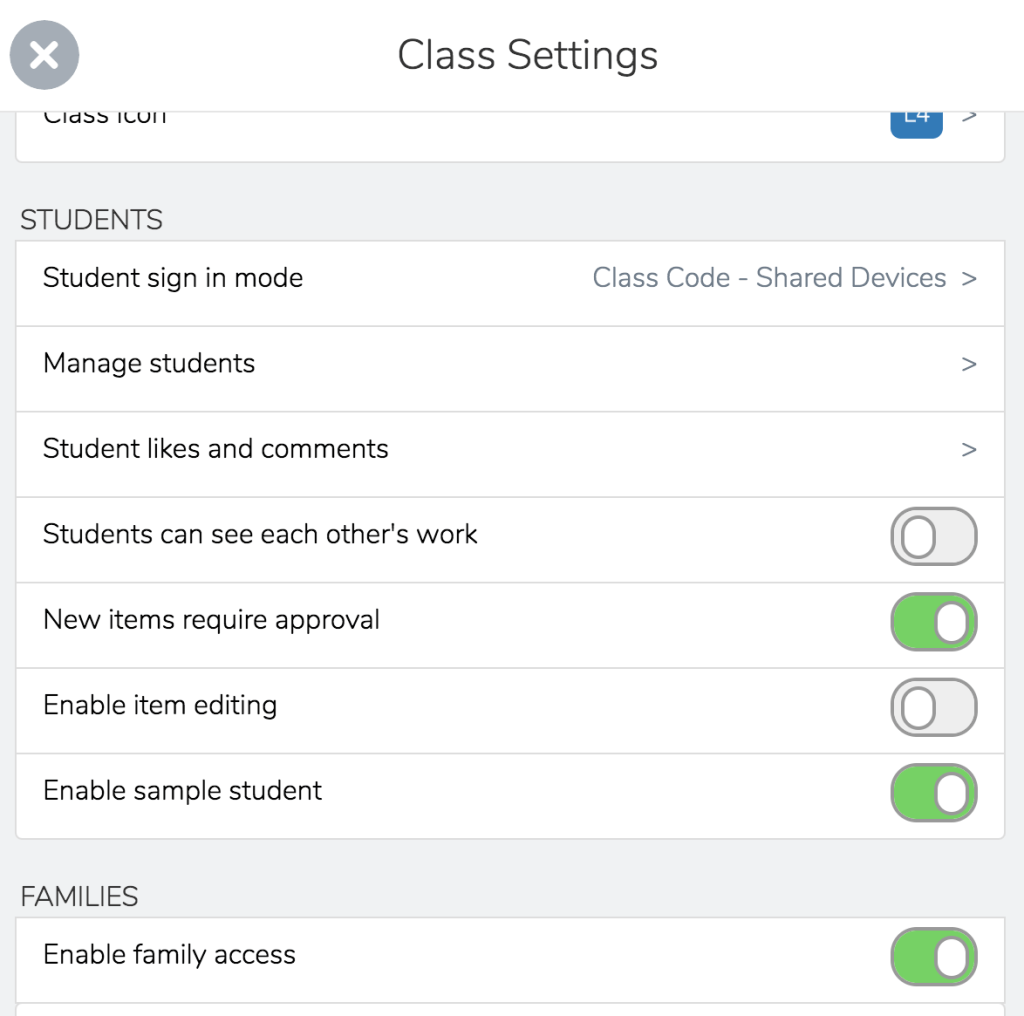
Seesaw is designed for classroom use, and therefore student profiles are kept private and only visible to their teacher(s), family members who have connected to their Seesaw, and their peers (although this option can be turned off).

A screen capture of some of the settings in Seesaw

What are some of the benefits of Seesaw?

Home Communication

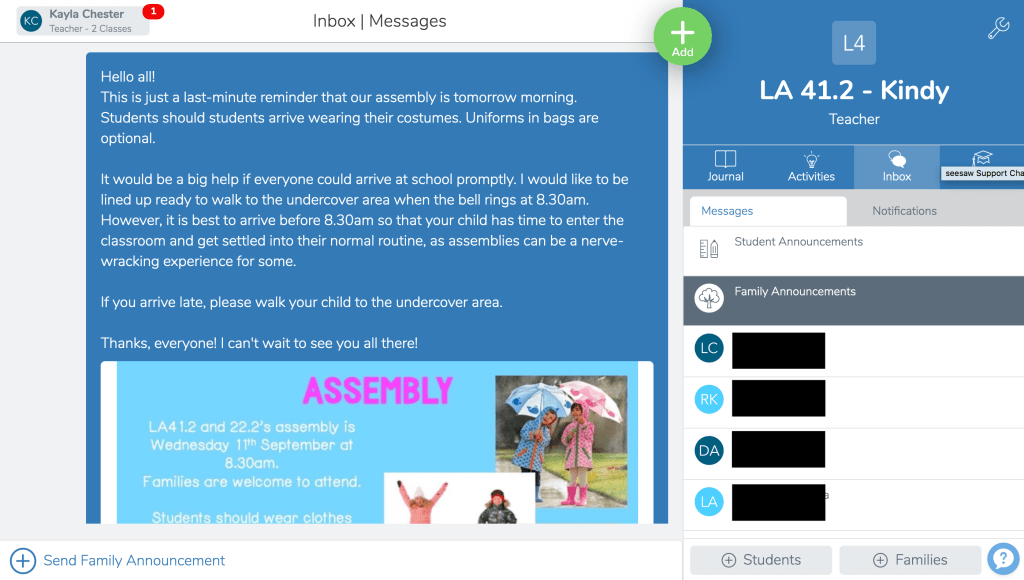
Families connected to their child’s Seesaw journal get a glimpse into their child’s day and in the case of assessment tasks, an understanding of how their child is progressing. It has also been used by speech pathologists to communicate to parents what skills children were working on and activities families can do to support them (Ray, 2017).

A screenshot of the “Family Announcements” function on Seesaw (Names blocked out for privacy)

Developmentally appropriate for the early years

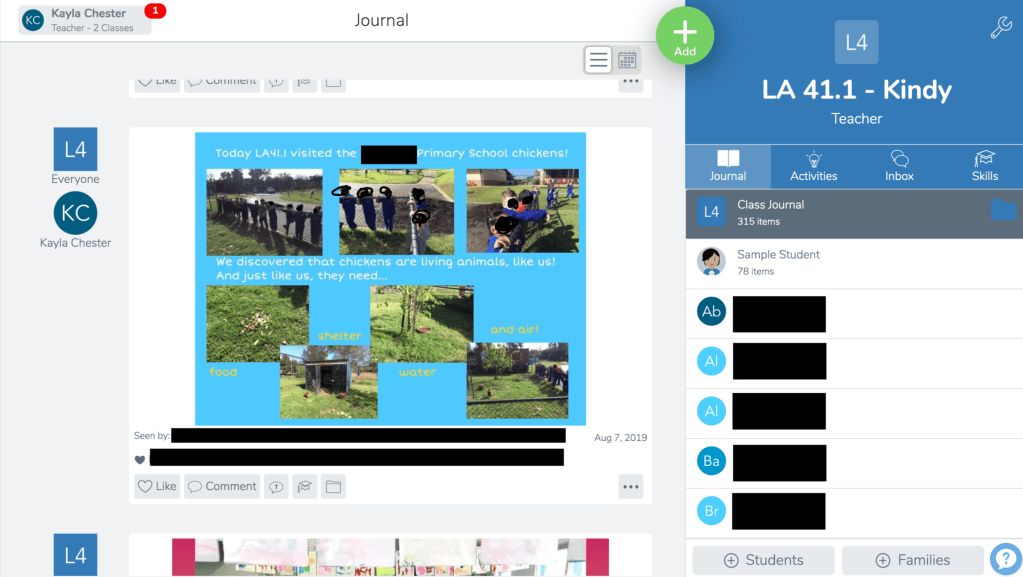
It can sometimes be a challenge for early childhood teachers to find technologies that are appropriate for younger children and that complement play-based learning approaches. Fantozzi, Johnson, & Scherfen (2018) found that Seesaw worked well with play-based pedagogies because teachers were able to caption photos to give families “a much more well-rounded look inside the classroom than the tangible products (like paintings) that were sent home” (pp. 91-92).

A screenshot of an a learning experience posted on Seesaw (Names and faces blocked out for privacy)

Below is a more comprehensive list of the benefits of seesaw:

(@Sylviaduckworth, 2016)

What are some things to consider when using Seesaw?

Data and privacy

Some parents and educators have concerns about the privacy of Seesaw given that the data is stored in California and that educators are sharing images of minors on the platform. You can read the Privacy Evaluation on Seesaw published by Common Sense here.

Issues relating to parental access

Educators using Seesaw need to do so with consideration for their students’ family situations in mind. Comments on a child’s work sample by a family member can be viewed by other family members connected to the child’s journal, which may be an issue in some circumstances.

How do I use Seesaw?

As an early childhood educator, I use the audio and visual tools extensively over text tools. I also often use the ‘Activity’ function to set assessments for my students.

References

Bower, M. (2017). Design of technology-enhanced learning – Integrating research and practice. Bingley, UK: Emerald Publishing Group.

@Sylviaduckworth (2016, December 15). Sketchnote of “Top 10 Reasons to use Seesaw”. Retrieved from https://twitter.com/sylviaduckworth/status/809598470029971456?lang=en.

Fantozzi, V., Johnson, C., & Scherfen, A. (2018). Play and Technology: An Important Intersection for Developing Literacy. Young Children, 73(2), 88-93.

Ray, A. (2017). ‘Seesaw’ Between School and Home. ASHA Leader, 22(5), 1-2.

Seesaw Learning, Inc. (n.d.). Seesaw logo [image]. Retrieved from https://help.seesaw.me/hc/en-us/articles/203816959-Seesaw-icon-and-logo.

Learning Design Visual Sequence and Early Childhood Education

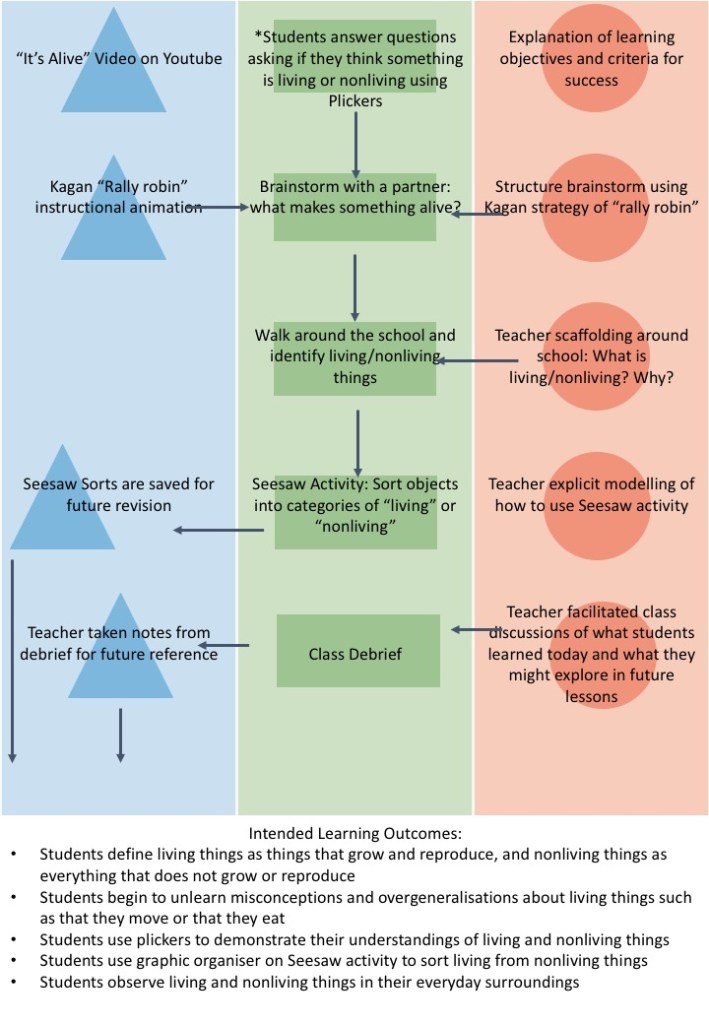
When I began planning out this blog post, I had intended to use a learning design tool to map out a lesson or unit of lessons that I could or already have used in my classroom. One tool that appealed to me was the Learning Design Visual Sequence developed by the Australian Universities Teaching Committee (2003). This visual sequence attempts to represent teaching and learning activities visually (Dalziel, Conole, Wills, Walker, Bennett, Dobozy, Cameron, Badilescu-Buga, & Bower, 2016).  I read through the descriptions provided on their website and had a go at structuring one of my kindergarten biological sciences lessons using the tool.

In the headings below, I will explore what I learned in using this tool.

Value-Added

I did not necessarily feel like I added any value to my lesson by using this tool. Although it was nice to see the elements of my lesson visually mapped out, I don’t think it necessarily improved my lesson design or made me think about it any differently. However, I do think it may be useful for pre-service teachers to further their understanding of the elements of lesson design.

Structure

As stated earlier, while it is visually appealing, the structure can be somewhat confusing to understand at first glance. In particular, the arrows and their direction or length and remembering what that means could take some getting used to.

Context

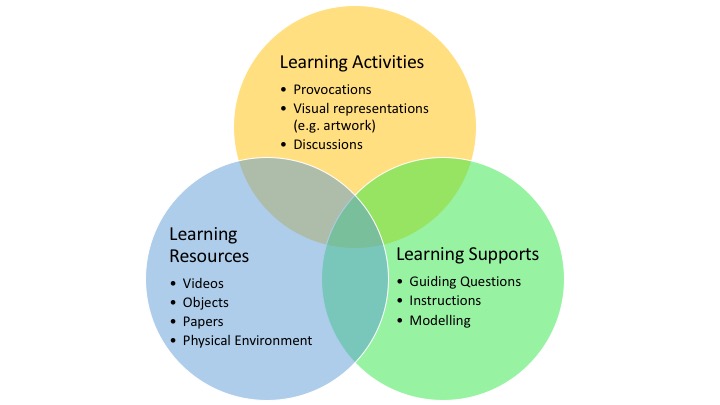
The rationale of the Learning Design Sequence is based on the work of Oliver (1999) that identifies the critical elements required in a learning design.

(AUTC, 2003)(Based on Oliver, 1999)

These elements were developed for the purposes of online learning – arguably a style of learning that will likely never be applied to the early childhood years, and possibly minimal application in middle to upper primary years. However, this diagram may still be useful in planning out units of work in primary classrooms if the contents are somewhat altered. I have included some ideas below. This isn’t fully developed, but is the product of a short brainstorm.

The actual learning design sequence is able to be applied to an early childhood setting as demonstrated by my example at the beginning of this post, however, it is usually implemented in tertiary institutions (Agostinho, 2011).

Final Word

Would I go through this process again? No. It was somewhat time-consuming and didn’t necessarily add value to my teaching. However, this tool may be more applicable to those teaching older age groups.

REFERENCES

Australian Universities Teaching Committee. (2003). The Learning Design Construct. Retrieved from http://www.learningdesigns.uow.edu.au/project/learn_design.htm#sequences.

Agostinho, S. (2011). The Use of a Visual Learning Design Representation to Support the Design Process of Teaching in Higher Education. Australasian Journal of Educational Technology, 27(6), 961-978.

Dalziel, J., Conole, G., Wills, S., Walker, S., Bennett, S., Dobozy, E., Cameron, L., Badilescu-Buga, E., & Bower, M. (2016). The Larnaca Declaration on Learning Design. Journal of Interactive Media in Education, 2016(1), 1-24.

Oliver, R. (1999). Exploring strategies for online teaching and learning. Distance Education, 20(2), 240-254.

Multimedia in an Early Childhood Classroom

In this post, I will be discussing multimedia while reflecting upon and sharing my own use of multimedia in my previous year 1 classroom.

What is multimedia?

Multimedia learning is learning from words and pictures (Mayer, 2014).

What is the multimedia learning hypothesis?

The multimedia learning hypothesis is the theory that people learn better when provided with both words and pictures, rather than words alone (Mayer, 2014). This theory is based on the idea of cognitive load and information processing theories, that posit that the human mind is akin to a computer that interprets, stores and retrieves information (Duchesne, McMaugh, Bochner & Krause, 2013). It is built upon three assumptions: The dual-channel assumption, the limited capacity assumption, and the active processing assumption (Mayer, 2014).

How can we use multimedia learning theory effectively?

Mayer (2014) lists five guiding principles for using multimedia to minimise cognitive load.

  1. Coherence: Multimedia must be relevant to the instructional goal
  2. Signalling: Use cues to direct the learner towards focus material
  3. Redundancy: Remove or reduce redundant material – for example, including either text or spoken words rather than one or the other
  4. Spatial Contiguity: Place illustrations near to relevant text to reduce the need for searching for information
  5. Temporal Contiguity: Present corresponding pictures and words simultaneously

How does this work in an early childhood setting?

Mclean & Wetzel (1997) state that “on its own, multimedia software cannot provide the rich learning opportunities that are so highly valued in experiential early childhood curriculum approaches” (p. 9). However, this does not mean to say to remove multimedia altogether – just that educators should not rely solely on multimedia representations of content. Young children require hands-on experiences and supportive interactions (Department of Education, Employment and Workplace Relations [DEEWR], 2009). However, I would argue that this necessity is not unique to early childhood students, and would likely apply to most primary and even secondary students.

How do I use multimedia in a year 1 classroom?

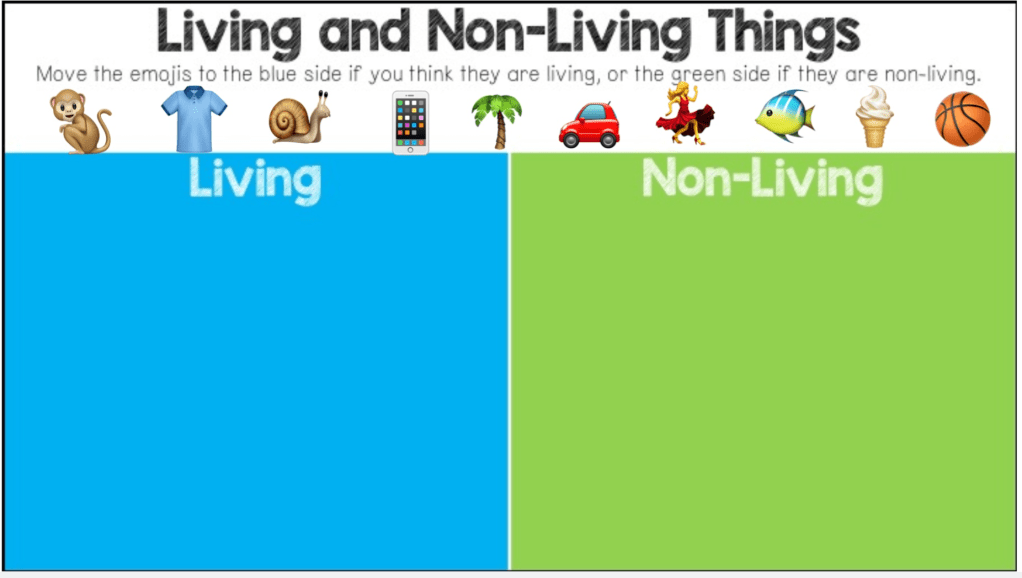
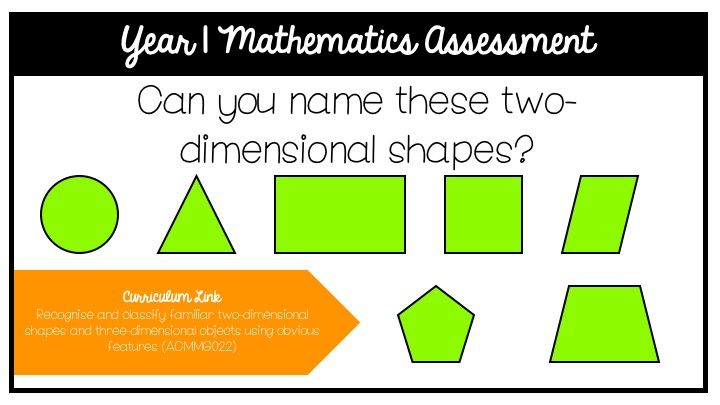
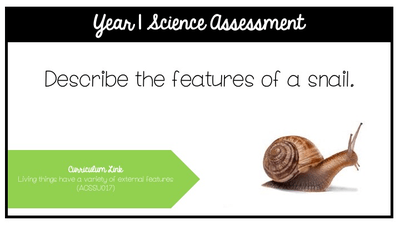
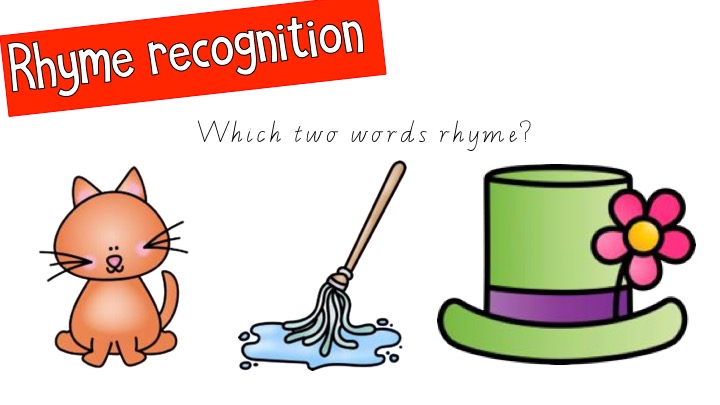
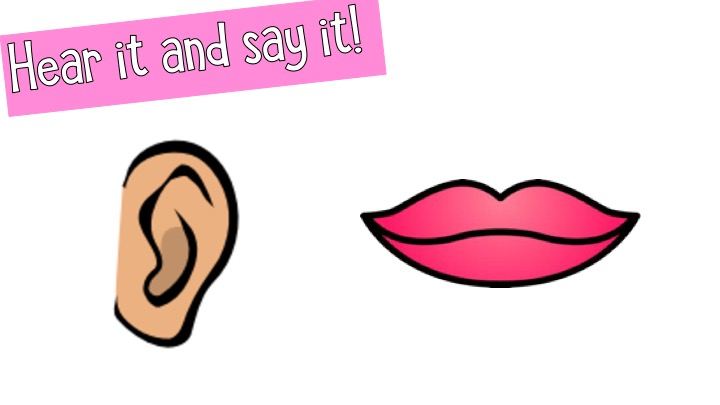
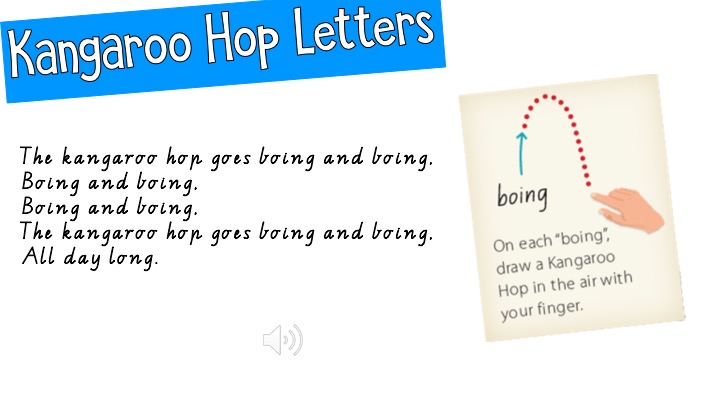
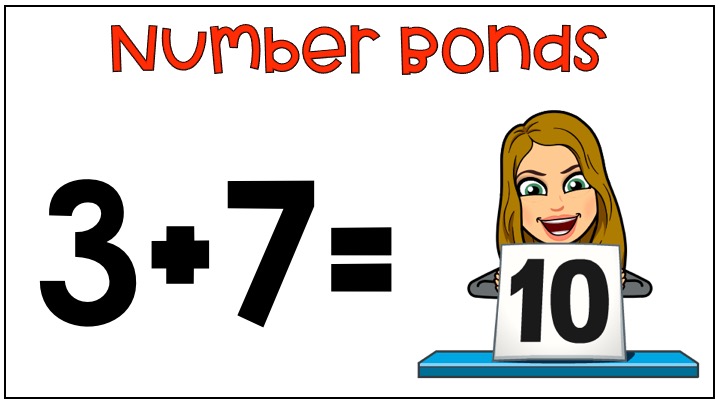
I use PowerPoint extensively in my classroom, especially for “warm-up” exercises. Below is a selection of some screenshots from some of my warm-ups. In the captions are a brief description of how I used the slide and a brief reflection on how it does or doesn’t adhere to Mayer’s principles.

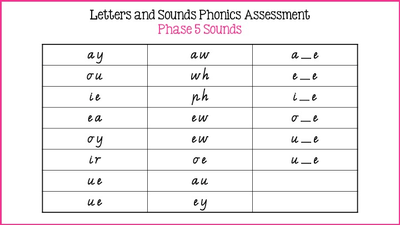
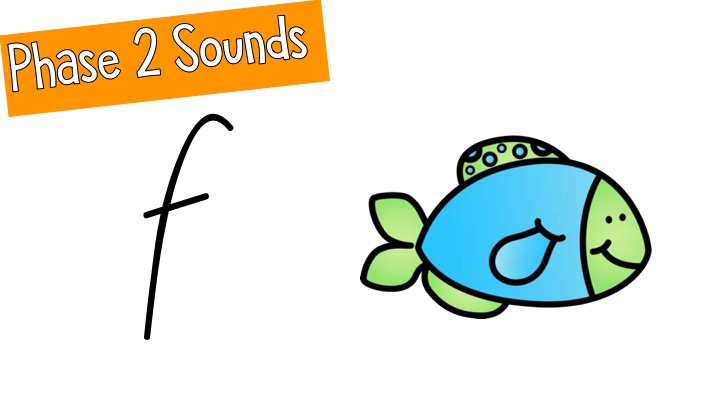
This is for practicing our sounds during literacy. Students will say the sound three times. The image here is removed as students build their fluency in recognising the letters. The writing in the orange box is for me rather than the students, but perhaps I could remove this redundant information and place it on the first slide only.
I purposely use images here as students can identify the words faster than if they were written, as the focus skill is rhyming. I could have removed some of the text as it is redundant having both “Rhyme recognition” and the question.
This is an instructional slide, as when we learn a new focus sound, we hear it and say it. These visual prompts are to remind students what the instructions were. I think having the visuals without text here is an example of reducing redundant material, as I would give verbal instructions alongside this slide anyway.
This is a handwriting warm up. The speaker button plays a song that we sing for handwriting. Song and lyrics are from Writing Time. This slide does have a lot of information on it for a Year 1, so it would be necessary for me to use signalling, perhaps with a mouse or pointer, to get students to attend to relevant information.
This is a fluency slide where we practice our number bonds to ten. I added a Bitmoji of myself for a bit of fun as it does seem to get the students attention. However, it could be interpreted as a lack of relevance to the instructional goal and therefore lack the coherence principle.
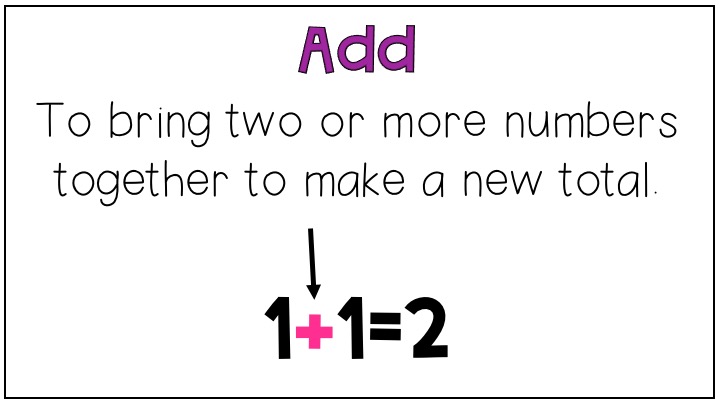
This slide can be used for instruction initially, but as revision later. This slide features the signalling principle, where the + symbol is in a different colour as well as having an arrow pointed to it.

References

Department of Education, Employment and Workplace Relations. (2009). Belonging, being and becoming: The early years learning framework for Australia. Retrieved from https://docs.education.gov.au/system/files/doc/other/belonging_being_and_becoming_the_early_years_learning_framework_for_australia_0.pdf

Duchesne, S., McMaugh, A., Bochner, S., & Krause, K. (2013). Educational Psychology for Learning and Teaching (4th ed.). South Melbourne, VIC: Cengage Learning. 

Mayer, R. (Ed.). (2014). The Cambridge Handbook of Multimedia Learning. Cambridge: Cambridge University Press.

Mclean, S., & Wetzel, K. (1997). Confronting the Paradox of Multimedia in Early Childhood Education: A Multidisciplinary Workshop. Journal of Computing in Teacher Education, 14(1), 5-10.

Self-evaluation of a lesson using TPACK

Today I am going to take a closer look at the TPACK Framework and use a self-assessment tool to reflect upon and evaluate one of my past lesson sequences that used technology. TPACK-based rubrics are beneficial for practicing teachers to support their technology-enhanced learning design practices (Bower, 2017).

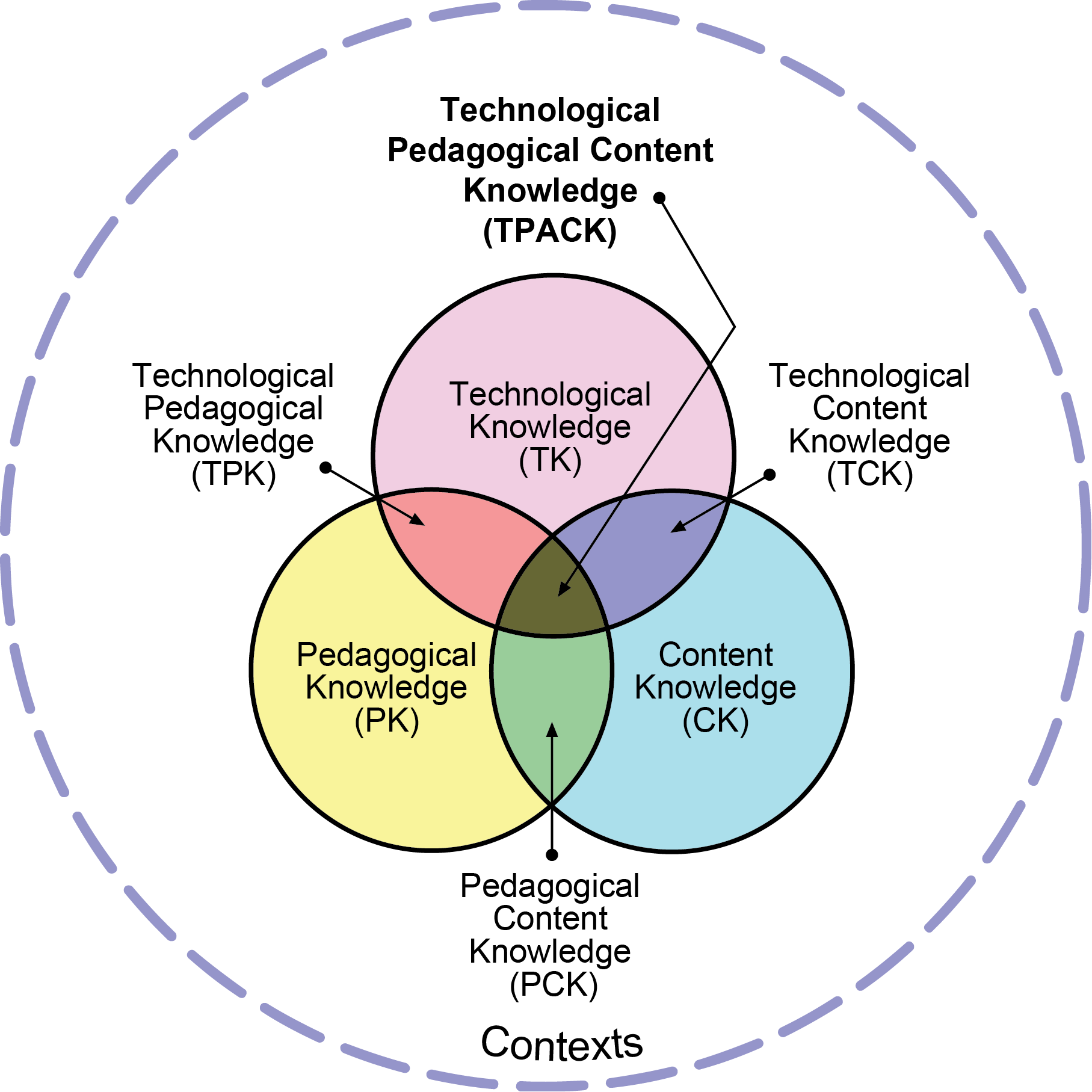
The Technology Pedagogy and Content Knowledge model was developed by Mishra and Koehler (2006) to ensure the integration of technology into educators’ pedagogy, rather than technology being integrated with a lack of theoretical grounding. The framework consists of three interrelated aspects: pedagogical knowledge, technological knowledge, and content knowledge that are surrounded by context.


(Tpack.org, 2012)

You can find more about how TPACK works by watching this video.


THE LESSONS

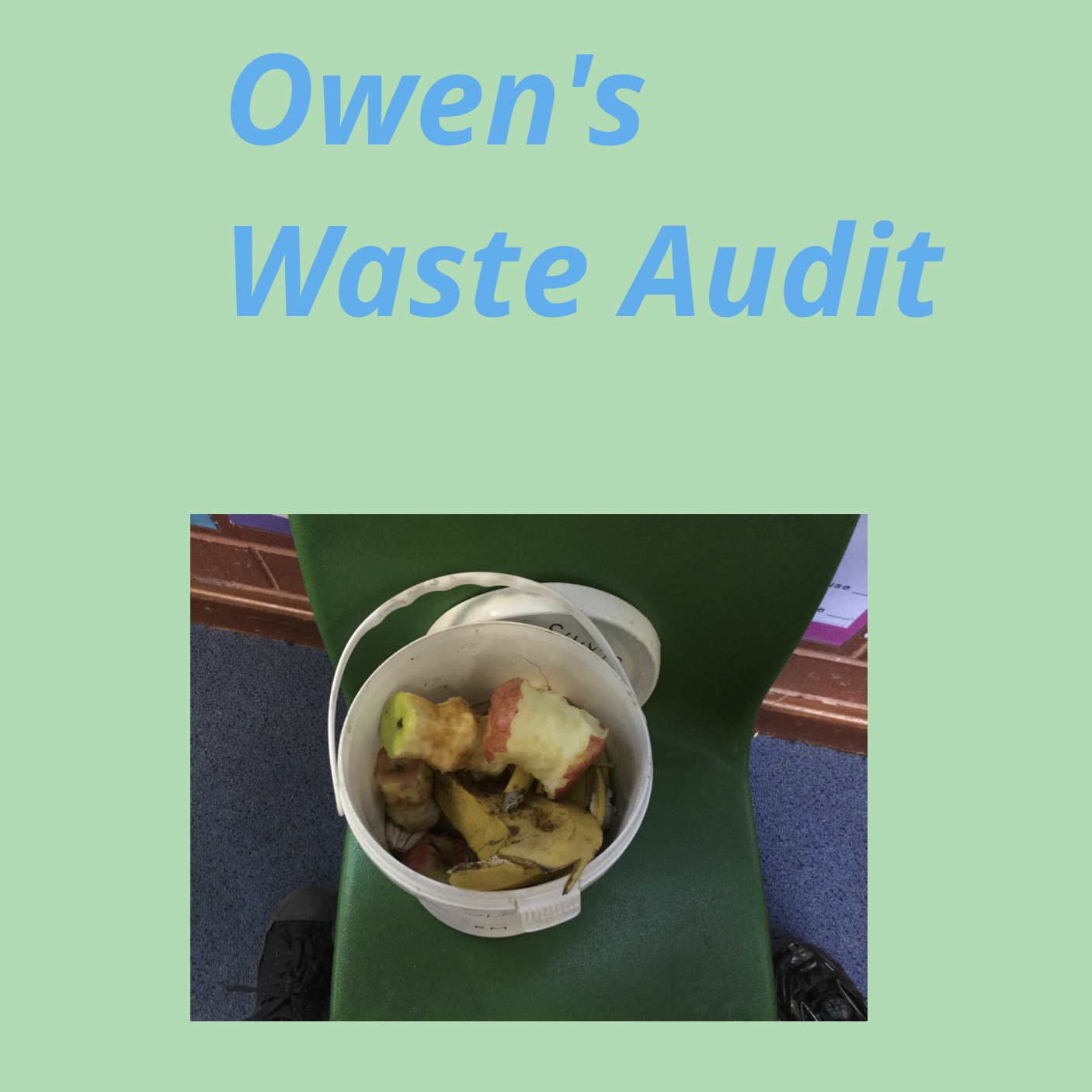
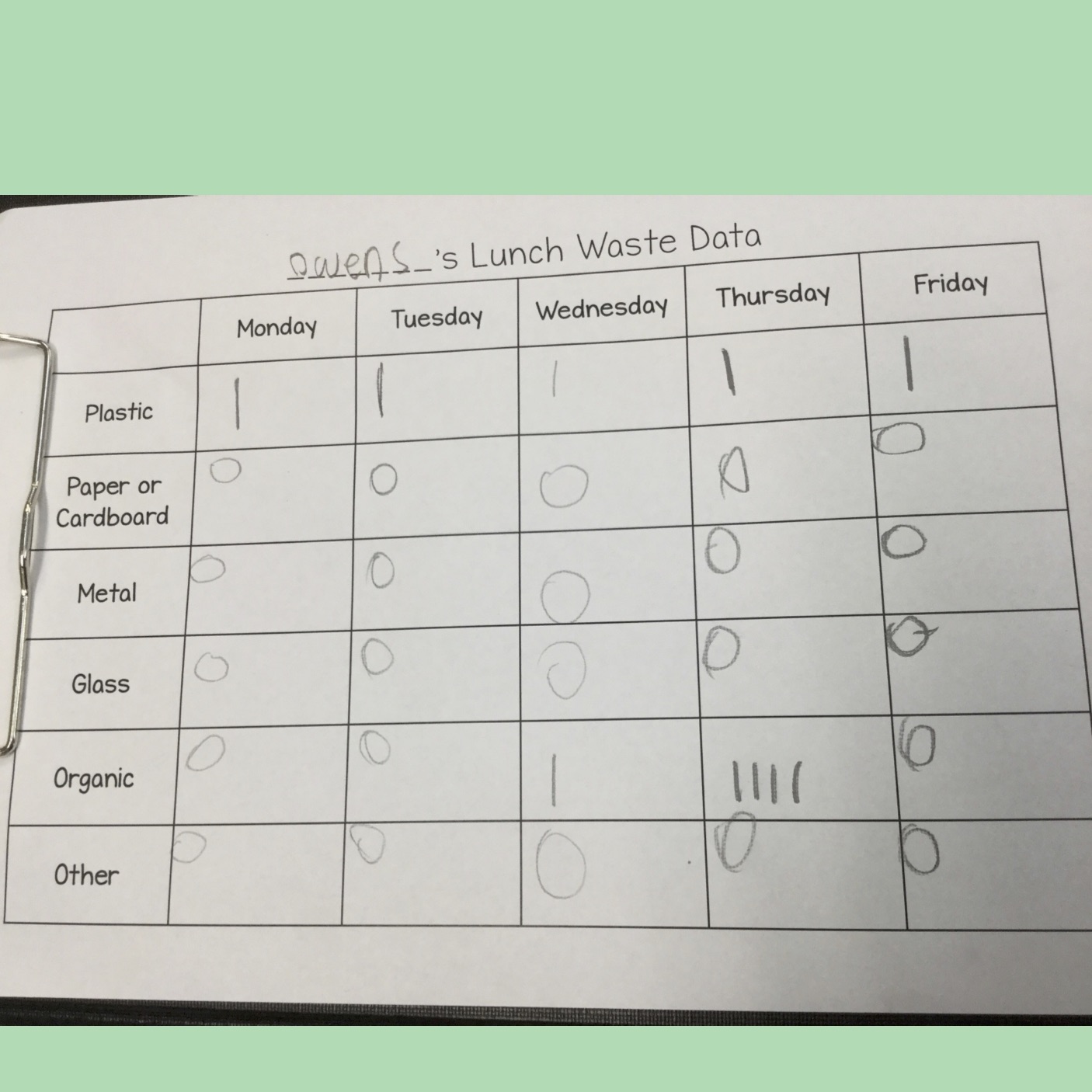
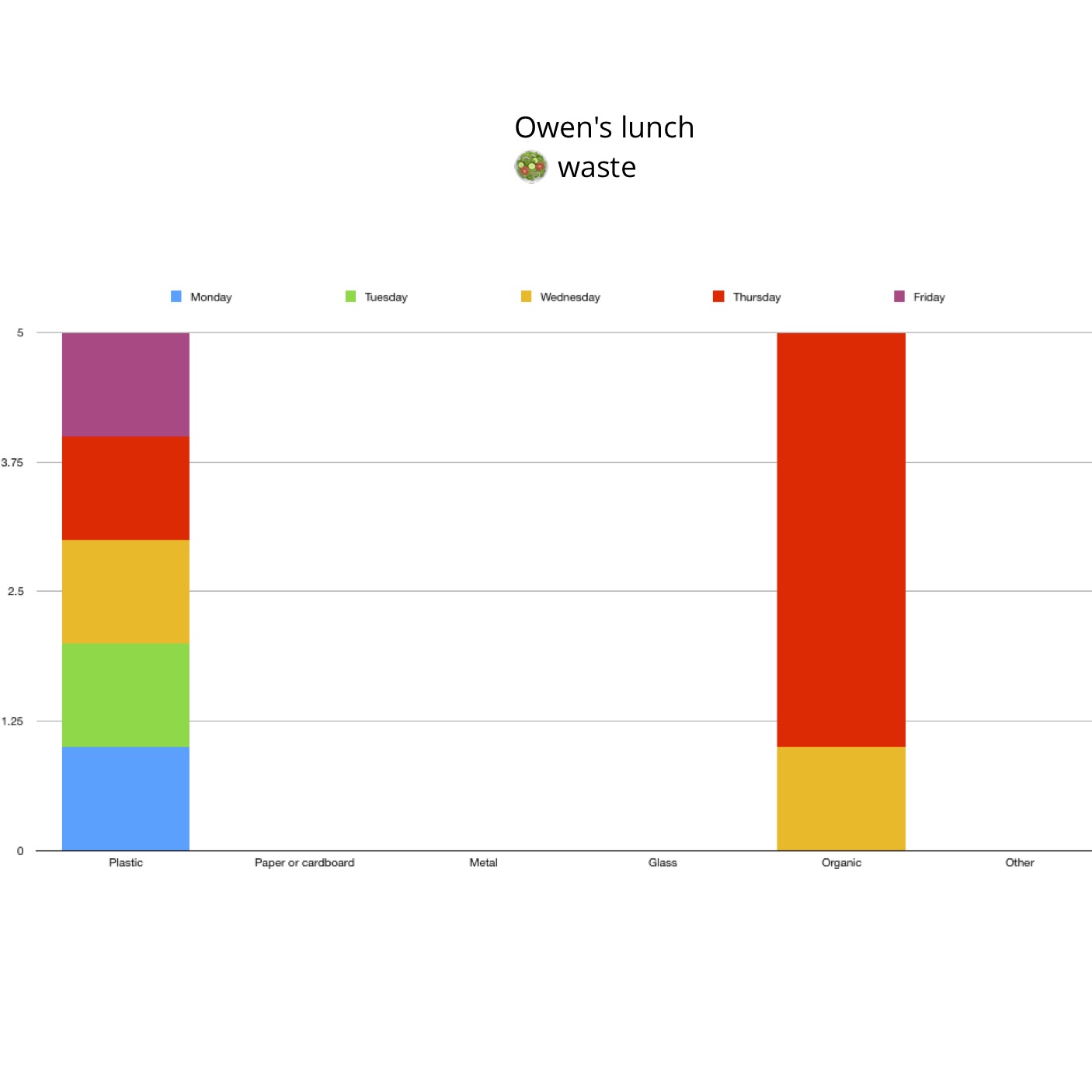
The lesson sequence I will be reflecting on in this blog post will be one that I taught my Year 1 class last year. My students had previously explored sustainability and waste minimisation, and this task encouraged them to take a closer look at their daily food waste. The students used iPads for this task, creating books on the Book Creator app and creating their graphs on Numbers app.

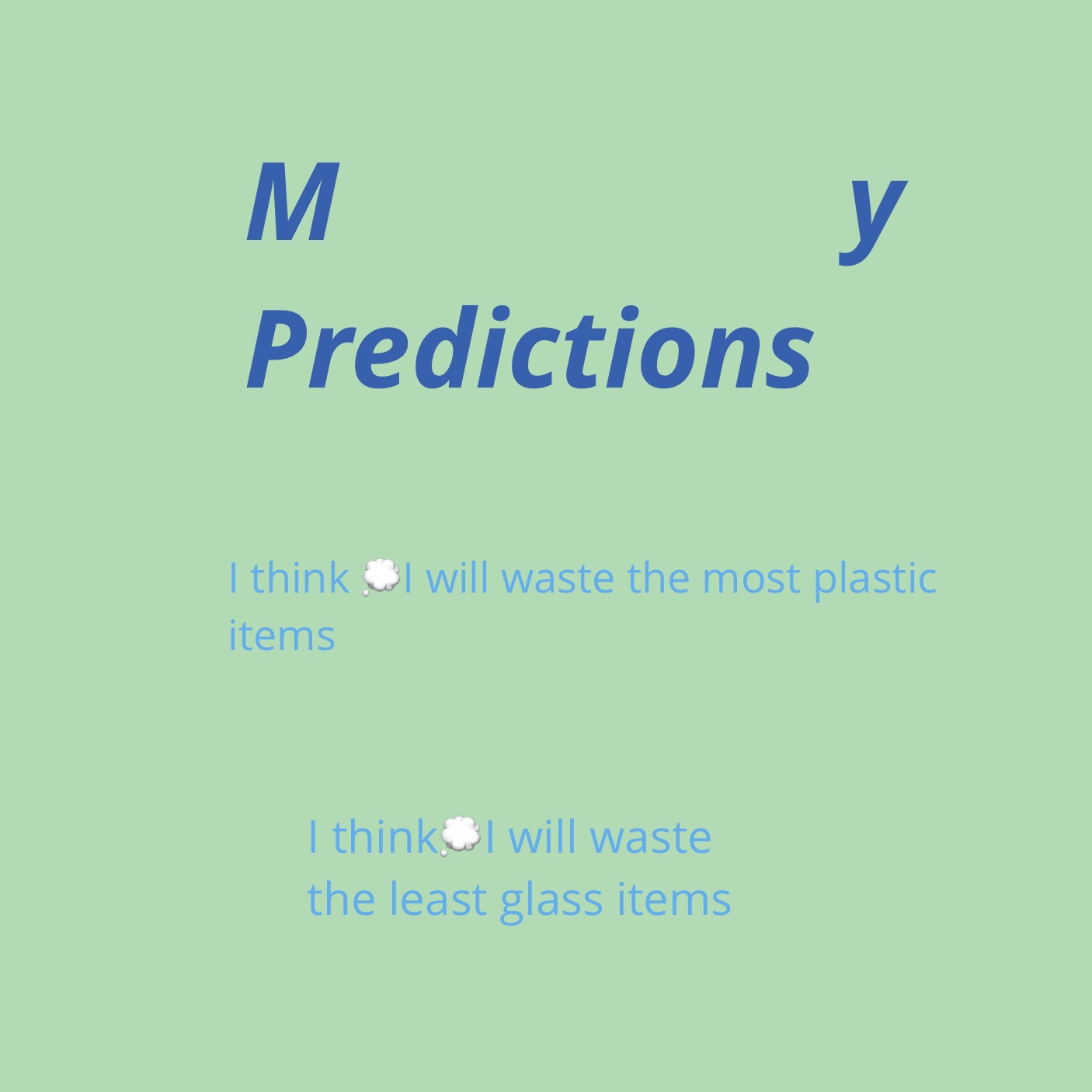
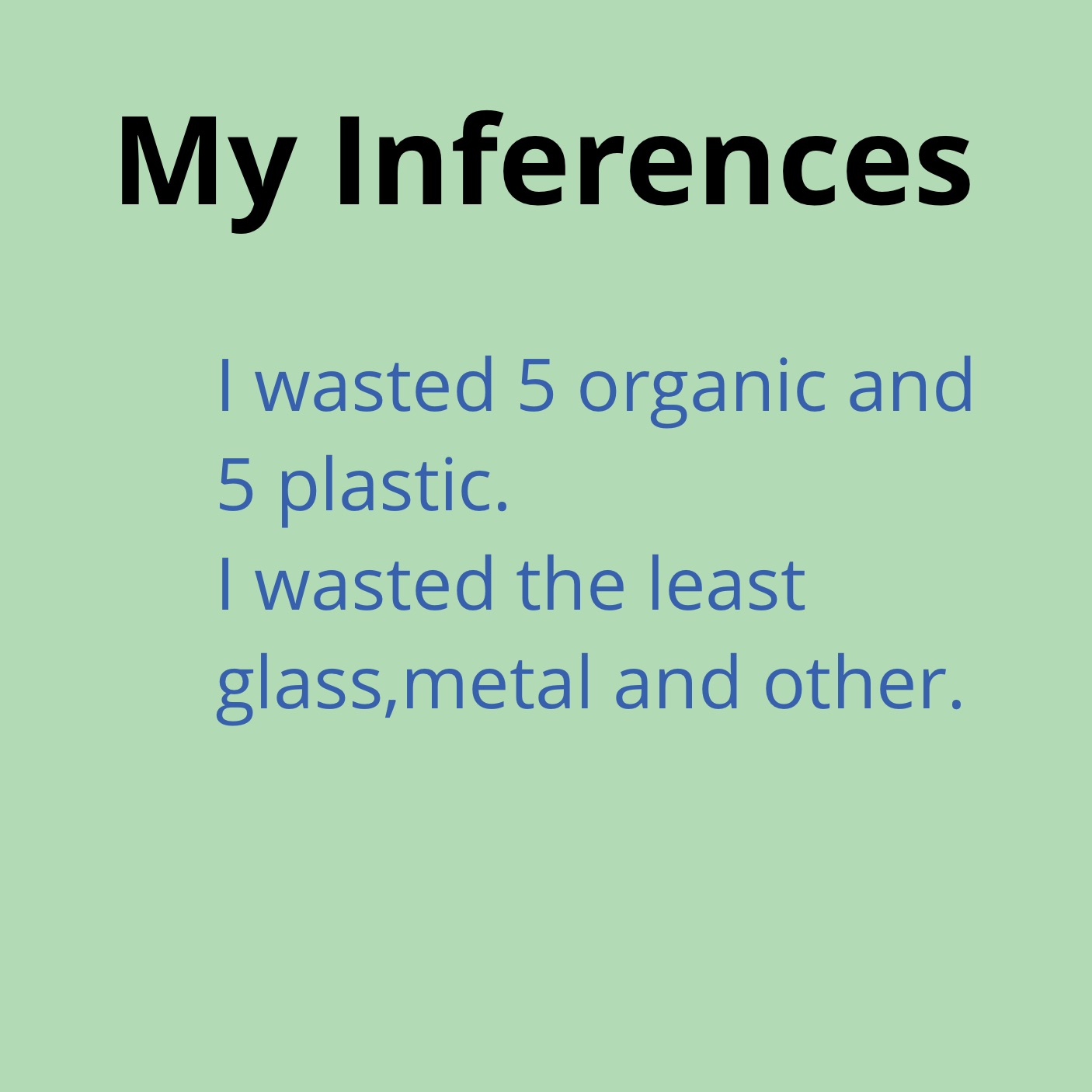
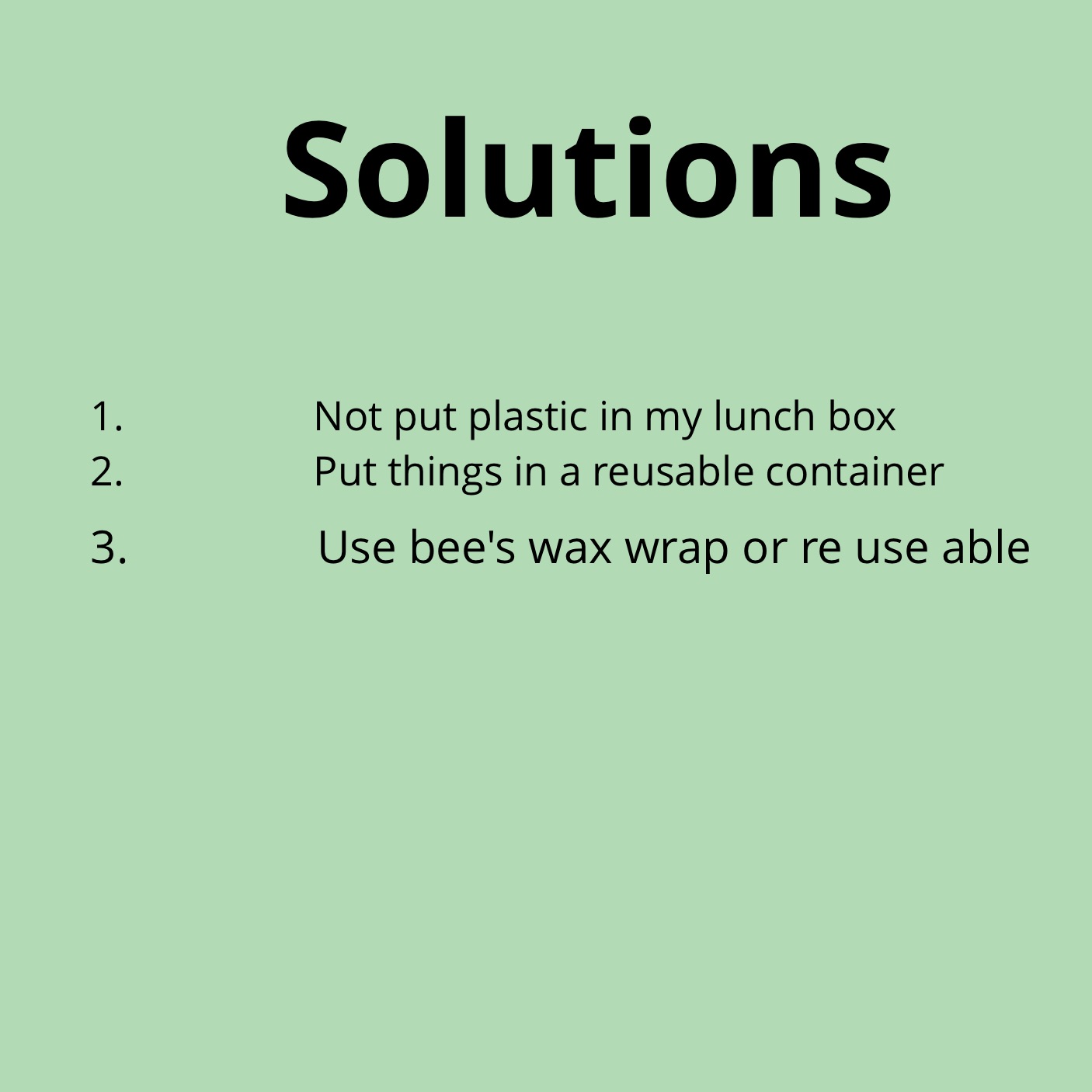
For this task, students predicted what type of waste would appear most frequently, collected data on their food waste which they used to create a graph, and then looked at this data to make conclusions about what waste they are creating and how they can minimise their waste. This project took place over approximately four lessons.


THE REFLECTION TOOL

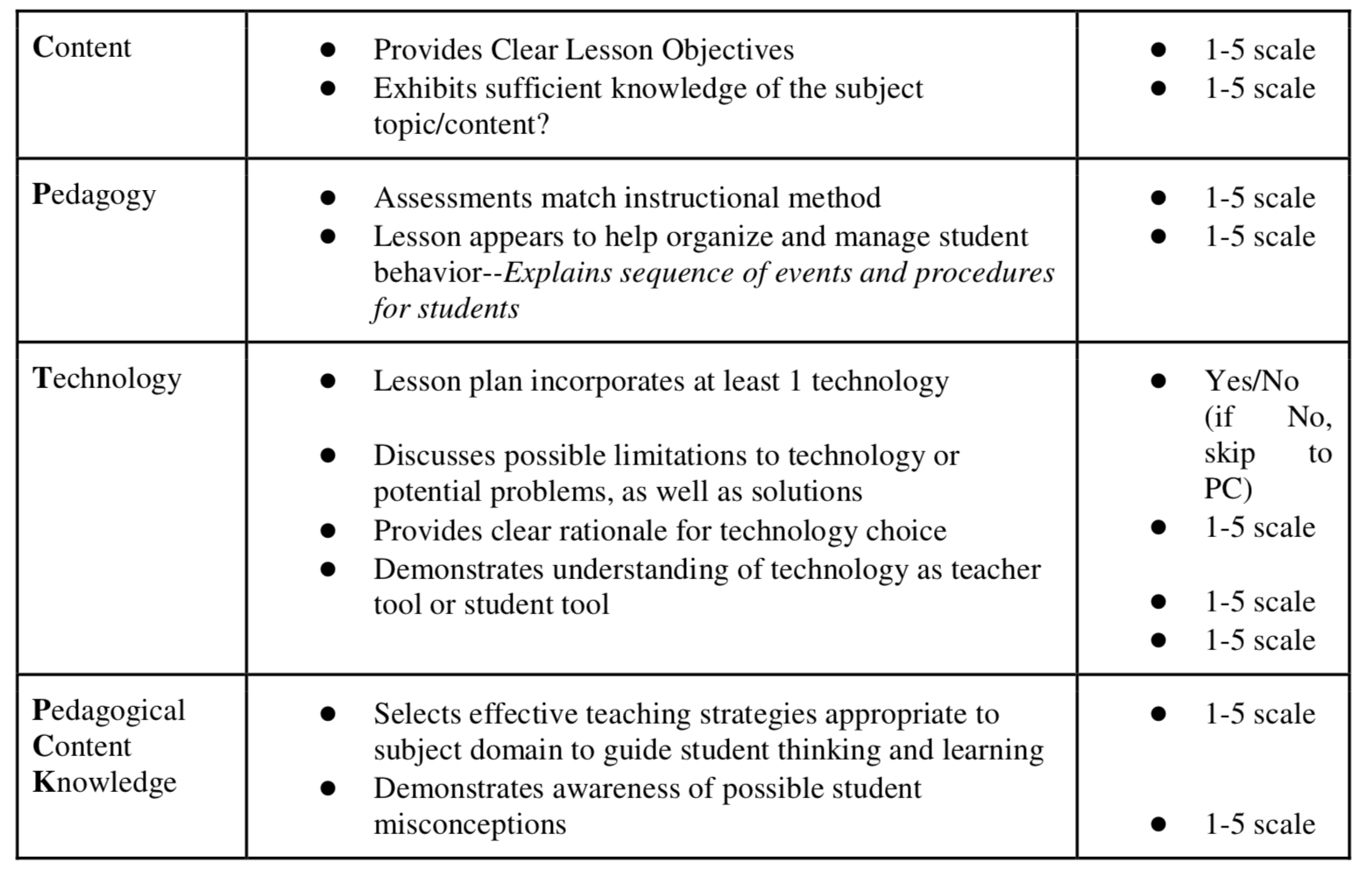
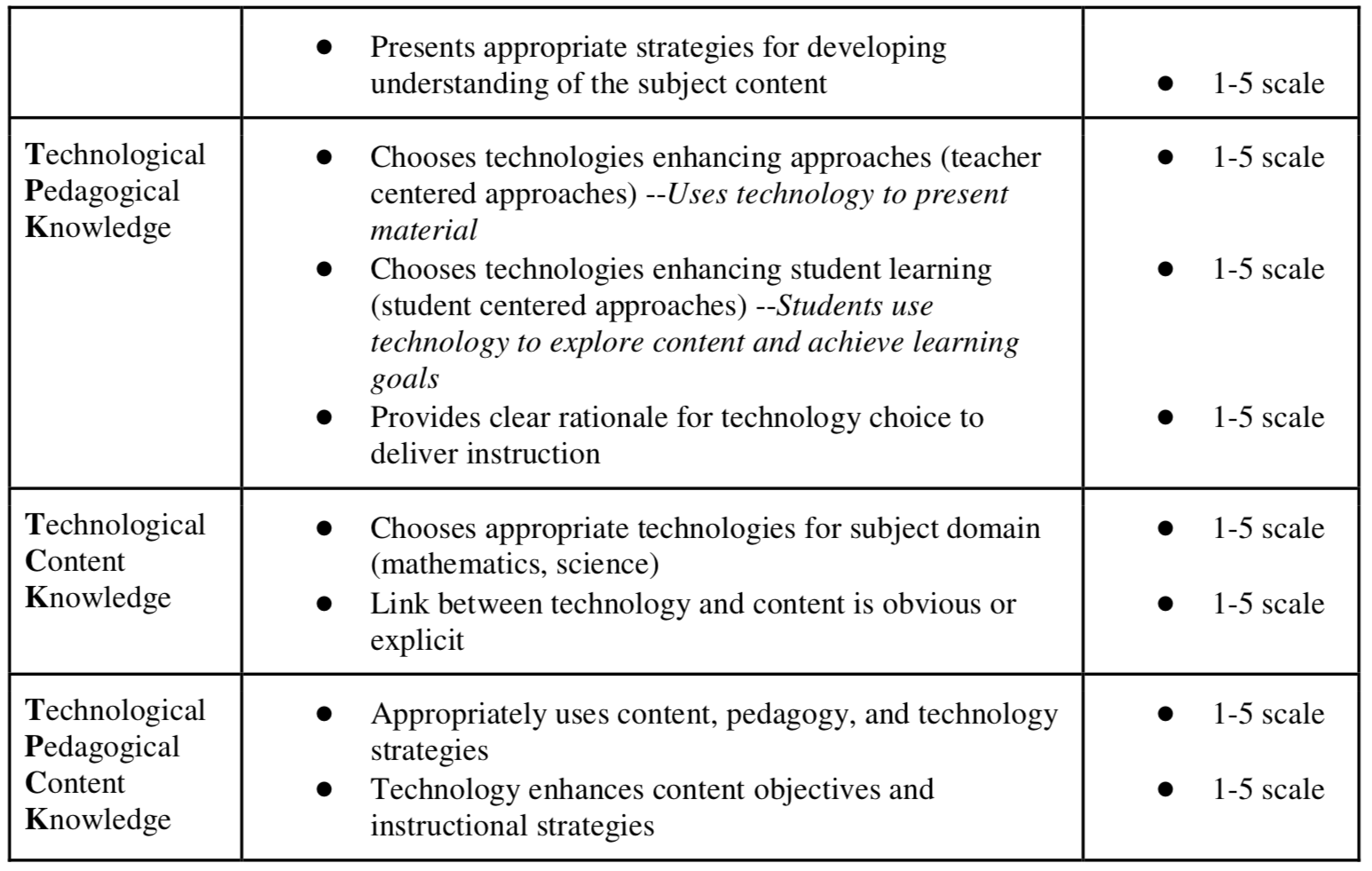
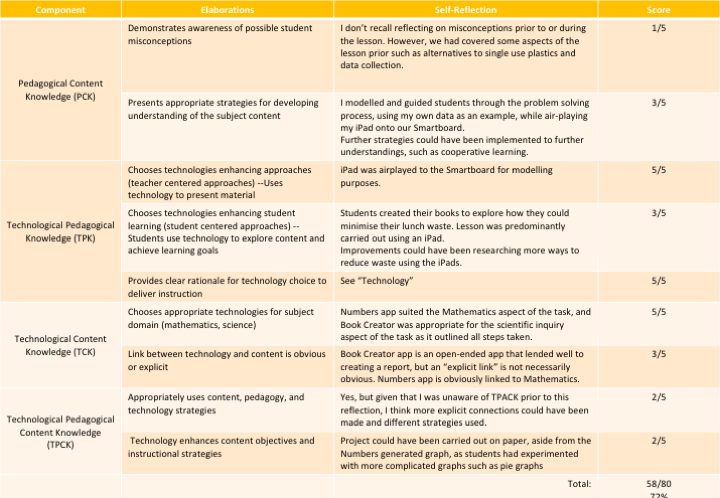
I chose a reflection tool that could be used to reflect on a singular lesson or short series of lessons. I had looked at the rubric developed by Koh (2013), but found that this rubric, while detailed, would be better suited to reflecting upon a long-term technologies program. I decided to use the TPACK Rubric developed by Akcaoglu, Kereluik and Casperson (2011) and have included the rubric below.

(Akcaoglu, et al., 2011)

FINDINGS

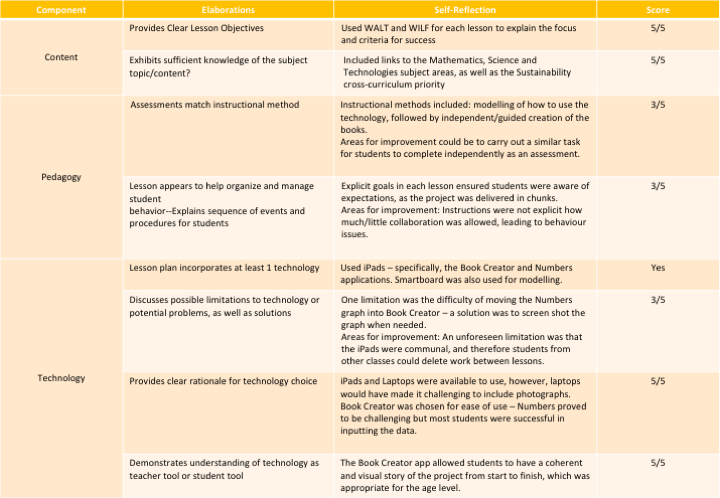
I found that although the TPACK framework was new to me, I had met a lot of the criteria in Akcaoglu et al.’s (2011) rubric. It was interesting to complete the reflection, as it alerted me to components that I had not considered and blind spots in my implementation. The negatives were that it was time-consuming, so perhaps a general reflection of practices using Koh’s (2013) rubric would be beneficial in future.

My self-evaluation using Ackaoglu et al.’s (2011) rubric

Word Count (excluding reference list): 368 Words

REFERENCES

Akcaoglu, M., Kereluik, K., & Casperson, G. (2011). Refining TPACK Rubric through Online Lesson Plans. Society for Information Technology & Teacher Education International Conference 2011. 4260 – 4264. Retrieved from https://www.researchgate.net/publication/279495336_Refining_TPACK_Rubric_through_Online_Lesson_Plans

Bower, M. (2017). Design of technology-enhanced learning – Integrating research and practice. Bingley, UK: Emerald Publishing Group

Koh, J. (2013). A Rubric for Assessing Teachers’ Lesson Activities with Respect to TPACK for Meaningful Learning with ICT. Australasian Journal of Educational Technology, 29(6), 887-900.

Mishra, P., & Koehler, M. J. (2006). Technological pedagogical content knowledge: A framework for teacher knowledge.Teachers College Record, 108(6), 1017-1054.

Tpack.org. (2012). TPACK Framework Image [diagram]. Retrieved from http://matt-koehler.com/tpack2/using-the-tpack-image/.