In this post, I will be discussing multimedia while reflecting upon and sharing my own use of multimedia in my previous year 1 classroom.
What is multimedia?
Multimedia learning is learning from words and pictures (Mayer, 2014).
What is the multimedia learning hypothesis?
The multimedia learning hypothesis is the theory that people learn better when provided with both words and pictures, rather than words alone (Mayer, 2014). This theory is based on the idea of cognitive load and information processing theories, that posit that the human mind is akin to a computer that interprets, stores and retrieves information (Duchesne, McMaugh, Bochner & Krause, 2013). It is built upon three assumptions: The dual-channel assumption, the limited capacity assumption, and the active processing assumption (Mayer, 2014).
How can we use multimedia learning theory effectively?
Mayer (2014) lists five guiding principles for using multimedia to minimise cognitive load.
- Coherence: Multimedia must be relevant to the instructional goal
- Signalling: Use cues to direct the learner towards focus material
- Redundancy: Remove or reduce redundant material – for example, including either text or spoken words rather than one or the other
- Spatial Contiguity: Place illustrations near to relevant text to reduce the need for searching for information
- Temporal Contiguity: Present corresponding pictures and words simultaneously
How does this work in an early childhood setting?
Mclean & Wetzel (1997) state that “on its own, multimedia software cannot provide the rich learning opportunities that are so highly valued in experiential early childhood curriculum approaches” (p. 9). However, this does not mean to say to remove multimedia altogether – just that educators should not rely solely on multimedia representations of content. Young children require hands-on experiences and supportive interactions (Department of Education, Employment and Workplace Relations [DEEWR], 2009). However, I would argue that this necessity is not unique to early childhood students, and would likely apply to most primary and even secondary students.
How do I use multimedia in a year 1 classroom?
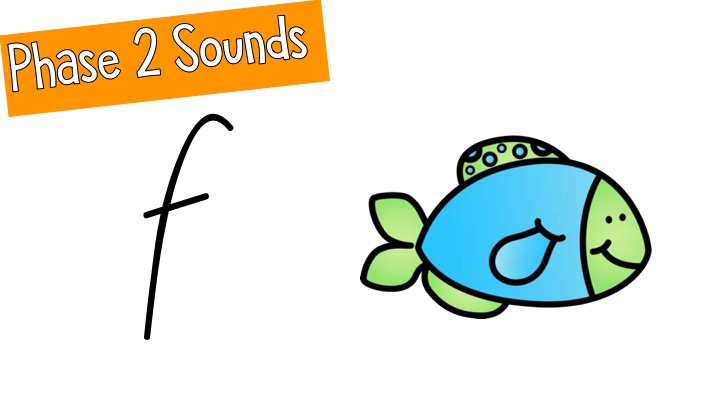
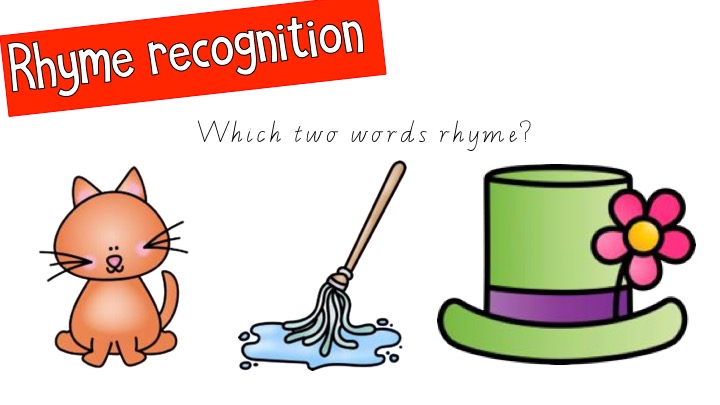
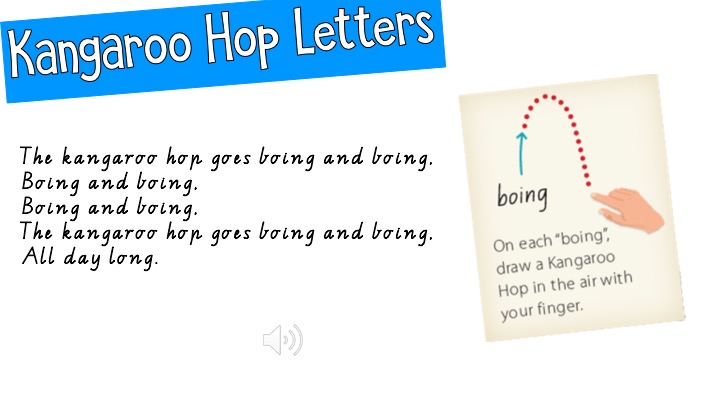
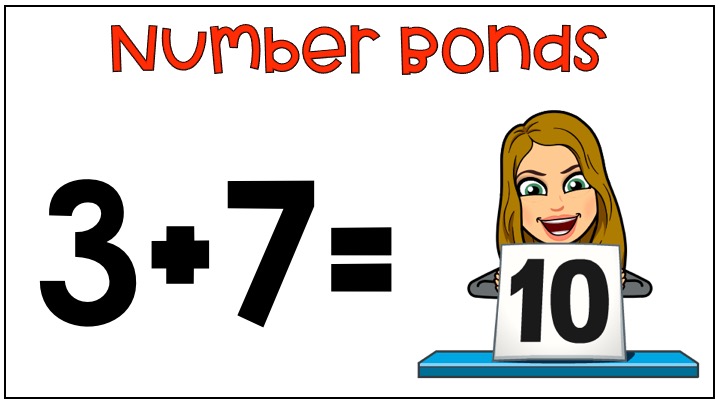
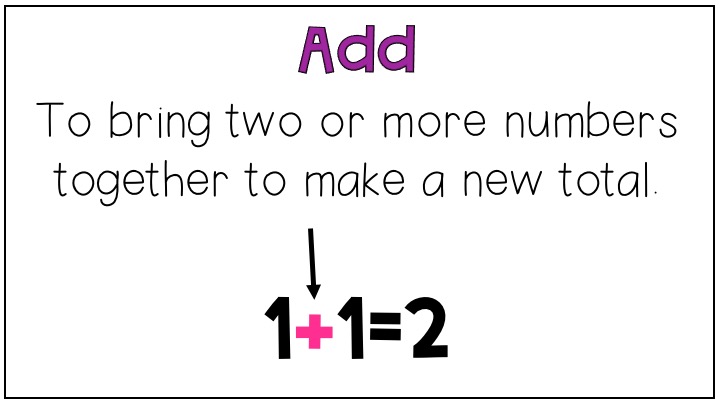
I use PowerPoint extensively in my classroom, especially for “warm-up” exercises. Below is a selection of some screenshots from some of my warm-ups. In the captions are a brief description of how I used the slide and a brief reflection on how it does or doesn’t adhere to Mayer’s principles.

References
Department of Education, Employment and Workplace Relations. (2009). Belonging, being and becoming: The early years learning framework for Australia. Retrieved from https://docs.education.gov.au/system/files/doc/other/belonging_being_and_becoming_the_early_years_learning_framework_for_australia_0.pdf
Duchesne, S., McMaugh, A., Bochner, S., & Krause, K. (2013). Educational Psychology for Learning and Teaching (4th ed.). South Melbourne, VIC: Cengage Learning.
Mayer, R. (Ed.). (2014). The Cambridge Handbook of Multimedia Learning. Cambridge: Cambridge University Press.
Mclean, S., & Wetzel, K. (1997). Confronting the Paradox of Multimedia in Early Childhood Education: A Multidisciplinary Workshop. Journal of Computing in Teacher Education, 14(1), 5-10.

 Kayla Chester EDCN865
Hi Kayla,
Thanks for sharing examples of your own Powerpoint slides. I appreciate how you have critiqued them using your knowledge of multimedia effects, including redundancy, signalling and coherence. I think Mayer’s (2014) 5 principles are very relevant and useful for teachers designing digital learning experiences, however I thinking there are some aspects of multimedia that are not covered by Mayer’s principles. For example, it would be interesting to consider, when using text, whether certain fonts or sizes of text effect how content is processed by learners. I wonder whether more cognitive strain is placed on the learner if the text is tricky to read? Or, how might the use of colours (i.e. too many colours, clashing colours) effect how visual information is processed?
I hypothesize that factors such as using a difficult font or too many colours may adhere to the redundancy effect where, media with “elaborate graphics” may impose “high levels of cognitive load” on the learner (Bower, 2017 p.81). It would be interesting to look into these ideas further.
These are just some thoughts I have that you might be interested in as well!
LikeLike
Hi Kayla,
Thanks for sharing examples of your own Powerpoint slides. I appreciate how you have critiqued them using your knowledge of multimedia effects, including redundancy, signalling and coherence. I think Mayer’s (2014) 5 principles are very relevant and useful for teachers designing digital learning experiences, however I thinking there are some aspects of multimedia that are not covered by Mayer’s principles. For example, it would be interesting to consider, when using text, whether certain fonts or sizes of text effect how content is processed by learners. I wonder whether more cognitive strain is placed on the learner if the text is tricky to read? Or, how might the use of colours (i.e. too many colours, clashing colours) effect how visual information is processed?
I hypothesize that factors such as using a difficult font or too many colours may adhere to the redundancy effect where, media with “elaborate graphics” may impose “high levels of cognitive load” on the learner (Bower, 2017 p.81). It would be interesting to look into these ideas further.
These are just some thoughts I have that you might be interested in as well!
LikeLike
Hi Kayla,
It was great to see how you have used PowerPoint in a variety of ways to engage your class in learning.
I agree with your reflection that some of your slides have redundant information, such as the additional orange or red headings. As you said, since this information is for you it definitely could be left only on the title slide. By just leaving the relevant information there for students, their cognitive load would be reduced.
Your slide with the speaker button is great. It fits with research completed recently by Castro-Alonso and Sweller (2020) about ‘The Modality Effect of Cognitive Load Theory.’ They identified that learning “from visualizations supplemented with comparable narration” (p72), is more effective than visualisation and text. I wonder if there is a way you could get each word of the song to highlight in a colour as it is sung out loud to the students? This would support your idea of signalling as an effect to get students to attend to the relevant information (Mayer, 2014).
Yvette
References:
Castro-Alonso, J.C., and Sweller, J. (2020). The Modality Effect of Cognitive Load Theory. In: Karwowski W., Ahram T., Nazir S. (eds) Advances in Human Factors in Training, Education, and Learning Sciences. AHFE 2019. Advances in Intelligent Systems and Computing. 963, pp75-84.
Mayer, R. (Ed.). (2014). The Cambridge Handbook of Multimedia Learning. Cambridge: Cambridge University Press.
LikeLike